
Swifts, those short-term summer visitors, from their screaming party over the Brampton rooftops. Eight..ten birds, they move so fast and change acrobatic so quickly that it is hard to keep track. I make a mental note to create some nest boxes for next year’s visit – every roof-improvement, each addition of roof insulation in the cottages serving to remove another traditional nest site. For the village not to host these visitors would be sad indeed.
-
Brampton Summer: the arrival of the Hobby Falcon
The combination of speed, grace and agility make any glimpse of this
small falcon an exhilarating one. Hobbys are summer visitors to the
parish. Every year, when I see one, I tend to get over-excited about it.
For obvious reasons small birds, their prey species, would not agree. This
wariness manifests itself in the almost perceptible electric tension in the air as the
Hobby appears – bird song stops and are replaced by their alarm calls as they
dive for cover. This morning’s target – a Meadow Pipit on the Common
– was lucky, quickly diving for cover and safety. -
River Bure – Burgh Balsam Bash – notice of meeting
The River Bure which winds its way around Burgh and Brampton is becoming increasingly overgrown with a non native species of plant (weed) by the name of Himalayan Balsam.
Himalayan Balsam is a relative of the Busy Lizzie and was introduced into the UK in 1839. It can grow to between 6ft and 10ft and produces clusters of pink flowers between June and October. Flowering is followed by seed pods that eventually ‘explode’ and can send seeds flying over a 20 ft radius. The plants remain viable for up to 2 years and are now naturalised on our riverbanks and has become a huge problem in Norfolk.
An introductory talk by Katy Owen, the Project Manager of the Norfolk Non Native Species Initiative, will take place in the Reading Room on Tuesday 20th June 2017 at 7.30pm followed by tea/coffee and biscuits.
The next step is hoped to be the Burgh and Brampton Balsam Pick which is provisionally set for Sunday, 2nd July 2017 at 10.00am, meeting in Burgh Churchyard. But this date is subject to confirmation.
-
Brampton Spring: the (long awaited) return of the Cuckoo
This year the Cuckoo was a late arrival in the valley. We can usually expect to hear their first call in late April, but not this year. Bill heard the first call yesterday morning (25th May) and I did not hear mine until 6.30 this morning (26th). The call was high and clear, sailing above the chorus of warblers and blackbirds that we are, thankfully, used to.
As the Cuckoo is such a wily and observant species, not given to wasting energy – or so I like to assume – then the species upon which is parasitises (the egg host) must be just into full egg laying. Perhaps the Sedge Warblers along the Bure. Certainly not the garden Dunnocks who seem to have been hard at work for a month or so already. We are unlikely to find out for certain. All we can say is the the Cuckoo is back from West Africa – Sumer is incumen in..
-
Brampton Spring: Swifts return
Chilly and overcast weather conditions in early May seemed to delay the return of the Brampton Swifts. Elsewhere, mostly in southern England reports came in of the arrival of the Summer visitor, but it was not until the 10th May that the familiar sight and sound of Swifts returned to the village. Since then the warmer evenings have had the added excitement of a screaming, roller-coaster-ing flight of a dozen or more Swifts dashing above the rooftops.
The sad fact is that, with each year and each house improvement their nest site choices are diminishing. We need a nest box building project.
-
Brampton Spring: Roe buck and doe
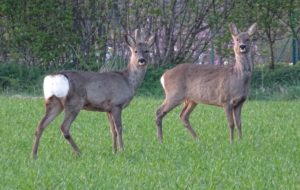
The sight of Roe Deer has become increasingly common in Brampton in recent years (see link to other posts within the Village blog), but they always feel like an encounter with a wilder, slightly separate world. Usually, the sighting it at some distance and commonly it is for a fleeting moment before the deer melt into the safety of woodland. However, the other evening the encounter was closer. It was all the more surprising because, as we walked along with the Whippets, conversation was in full flow – not the whispers and hand signals that so often have to accompany a deer stalk. The wind was in our favour, blowing from the deer to us – otherwise they would have sensed us, a hundred yards further back. But on this occasion it was an eye to eye meeting, as can be appreciated by the resultant photo.
-
Brampton Spring Litter Pick
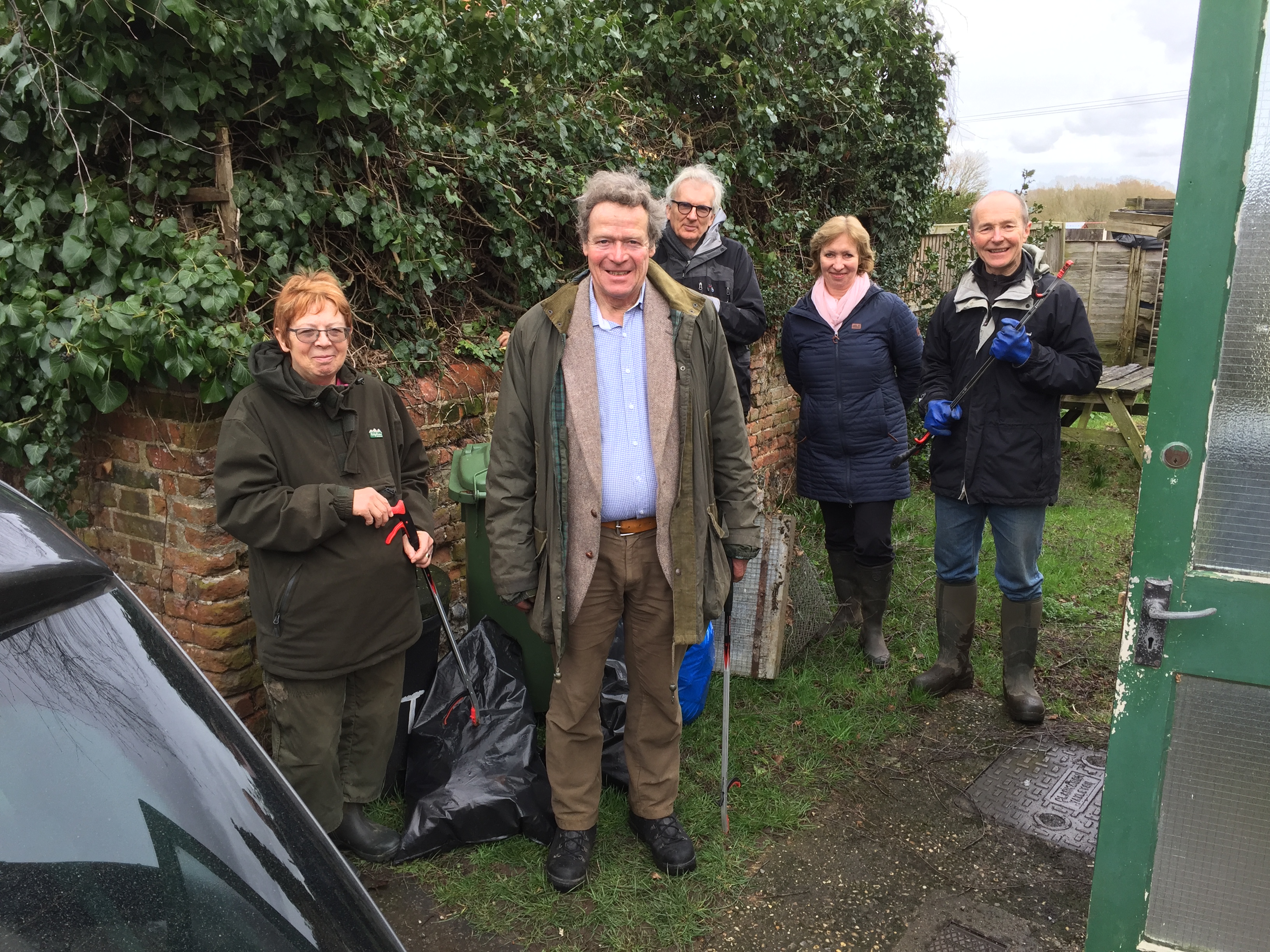
As promised, the rain cleared just in time for the annual Tidy Up on Saturday. A dozen volunteers combed the highways and byways of the parish in order to gather the rubbish dumped by the careless. Seven bags full of beer cans, bottles, fast food boxes and others detritus resulted from an hours work. Thank you to everyone who contributed theie time.
-
Brampton Spring: a flock on the start the start of a journey north
 A small flock of Golden Plover brighten up and otherwise nondescript morning. At first we nearly missed them as we walked along the old track, but then we noticed them; 26 Plover milling about quietly in a field of Winter Wheat. They took no notice of us – confident in their security. The light was too low for a decent photograph – I managed a grainy image that looks more like a watercolour than a photo (see above).
A few low whistling calls came from them, but as we continued to walk on they gradually merged into the background and disappeared from view. I like to assume that they are simply stopping over on their Spring migration north, although they may have wintered here.
-
Old brickwork at Oxnead Lock
The decaying brickwork of the Oxnead Lock. According to Edwin Rose (writing in 1993 as part of the Norfolk Archaeological team at Gressenahll) this brickwork was probably built in 1851 when the Mill was refurbished, although it is possible that some parts of the structure may date back to 1775 when the original engineering work on the cut was completed.

